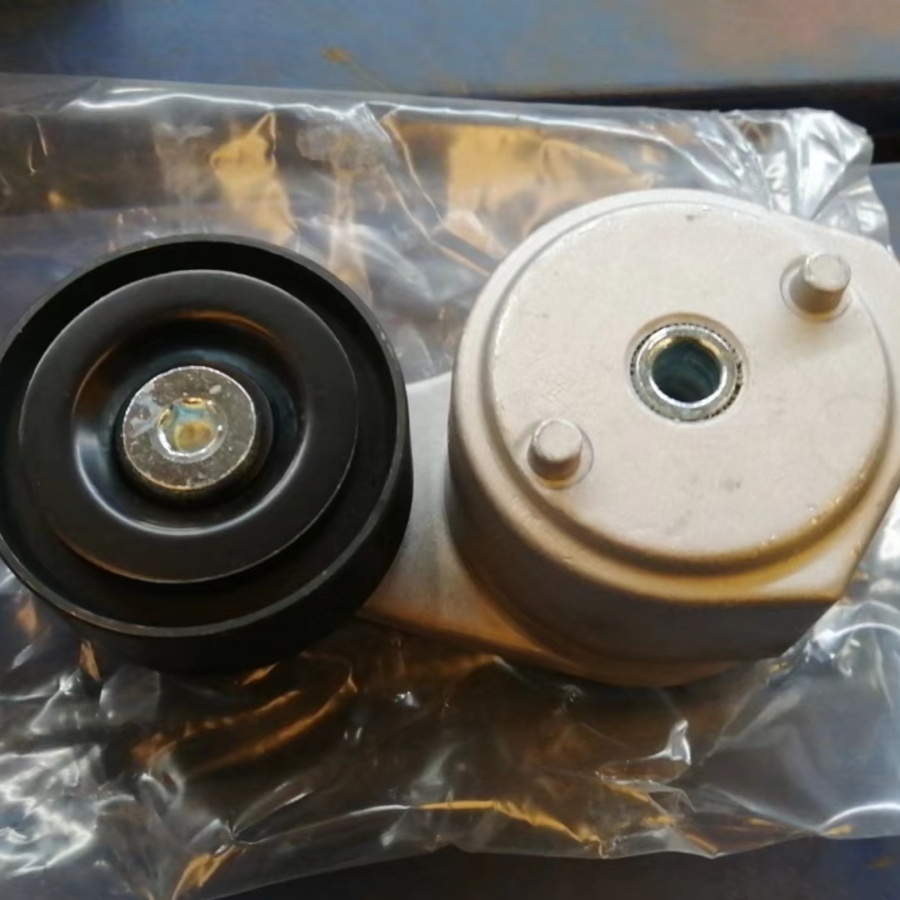
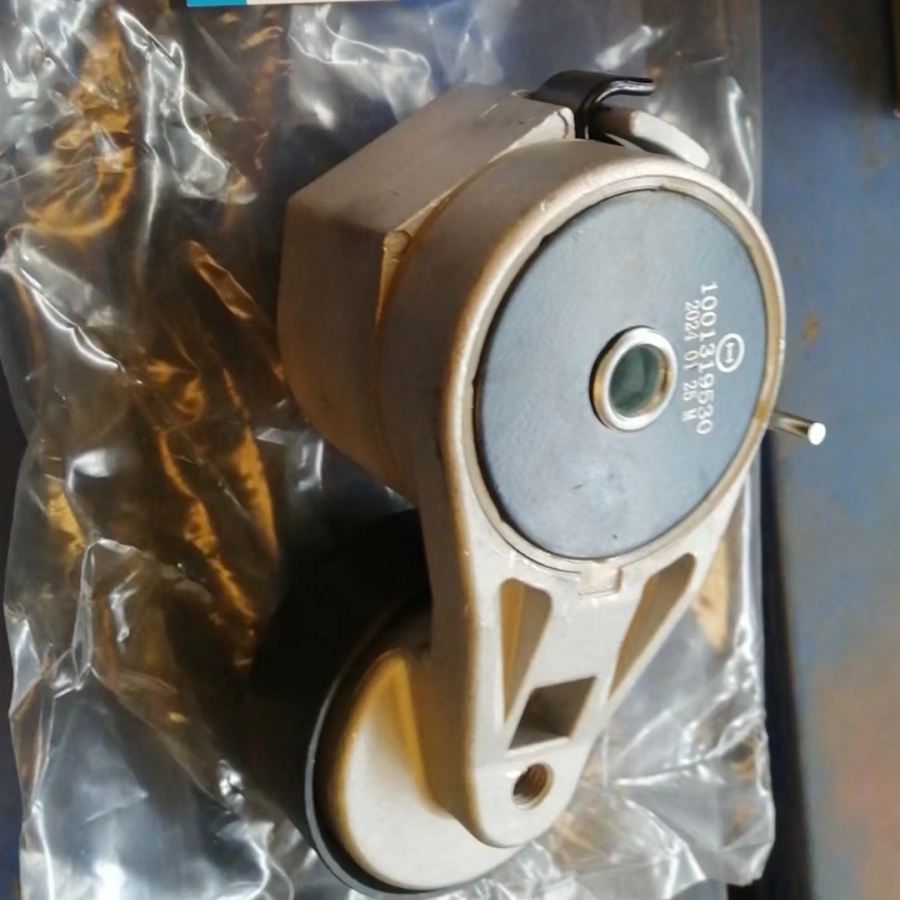
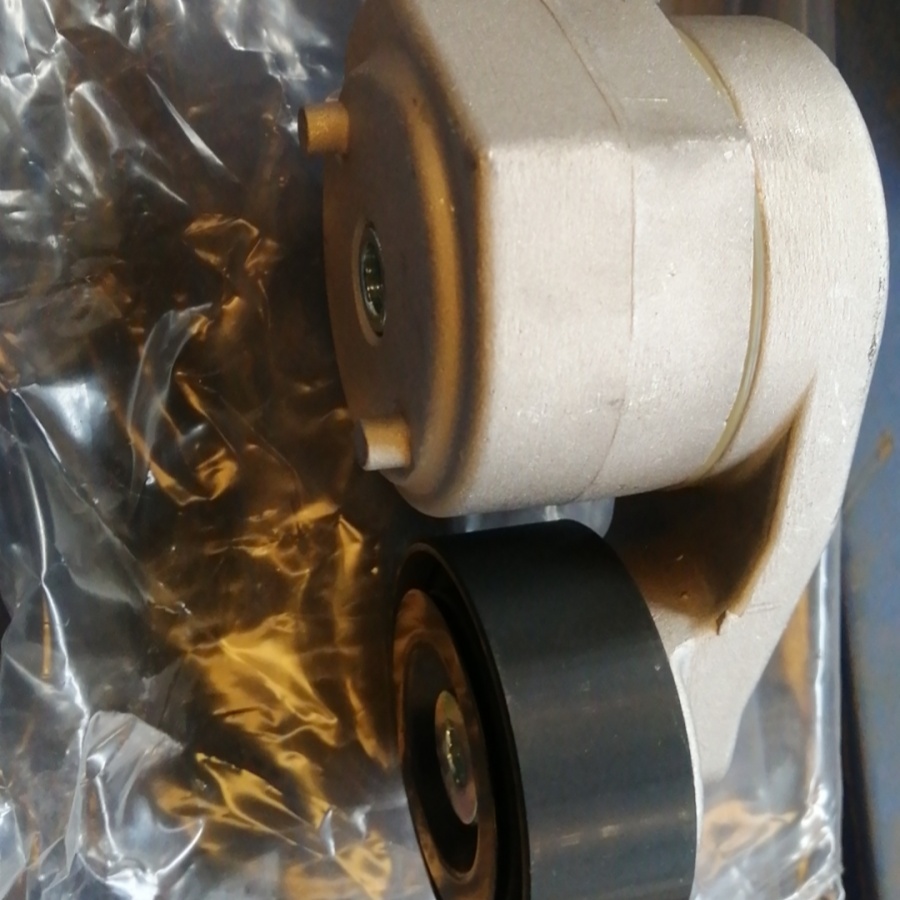
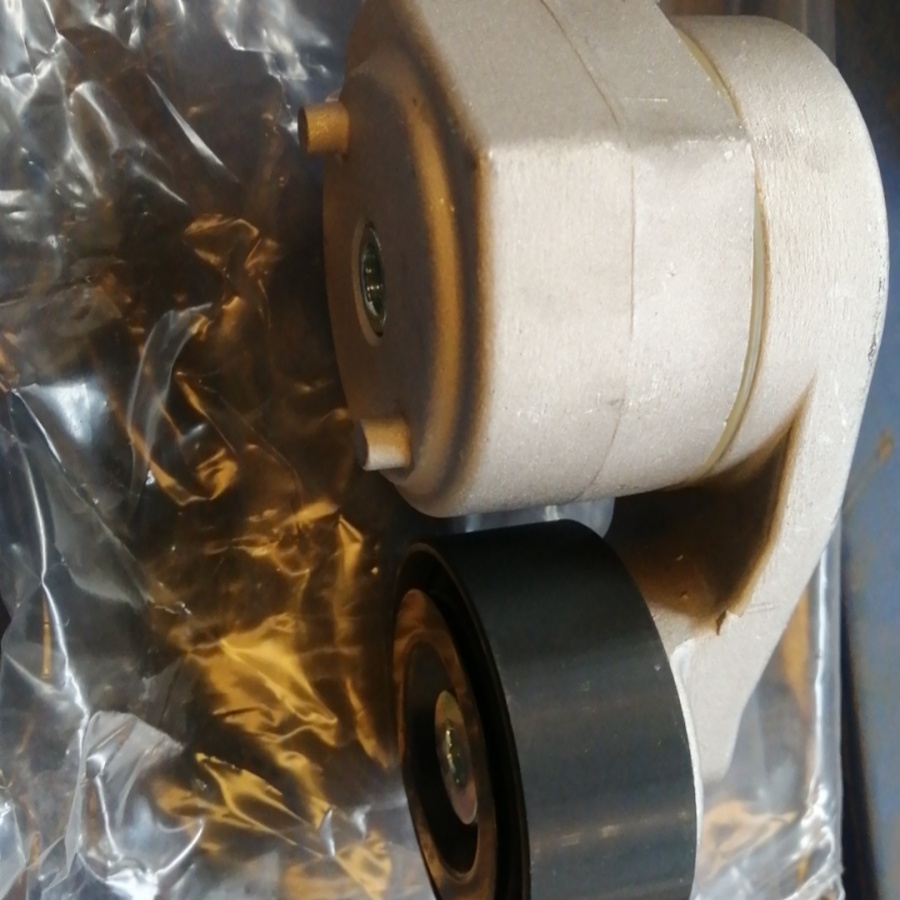
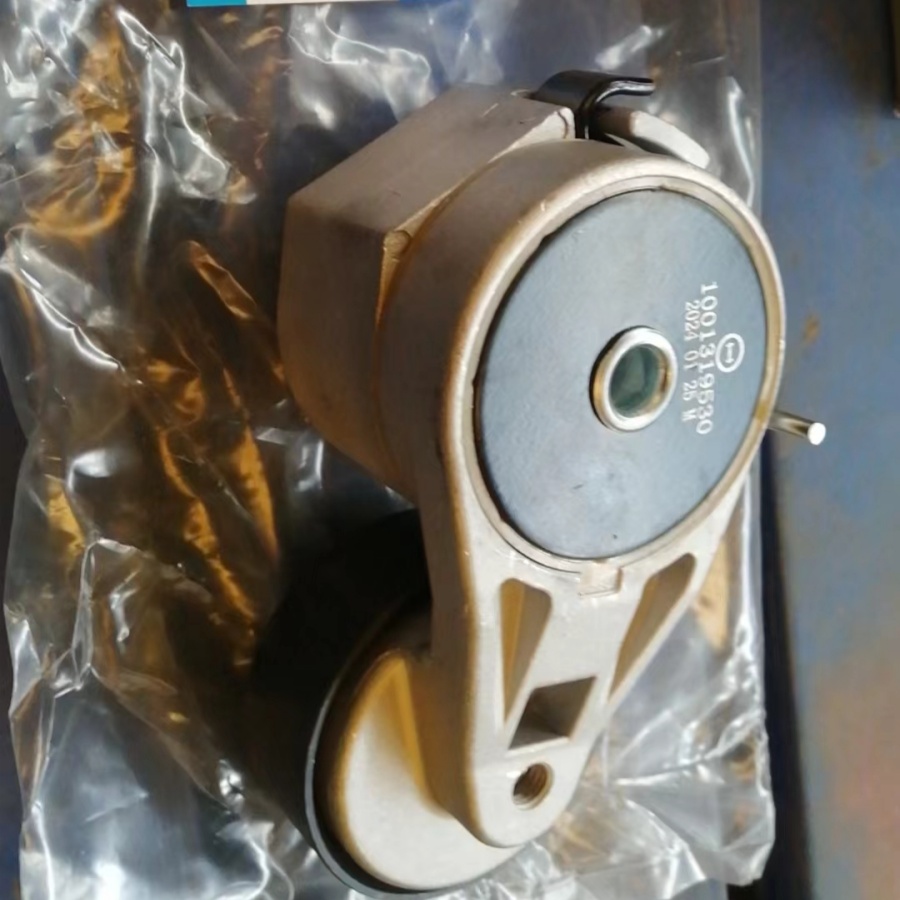
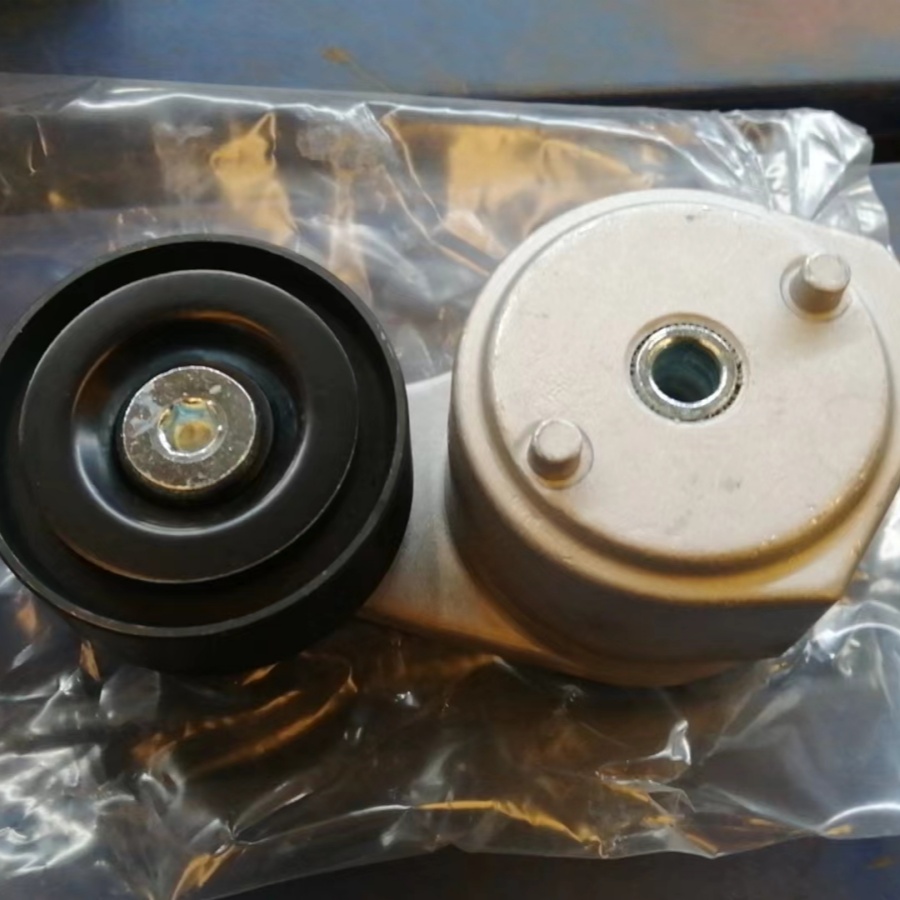
Weichai 1001319530 Original Belt Tensioner
1. Precise tension: Automatically adjust and accurately maintain belt tension to ensure efficient and stable power transmission.
2. Reliability and durability: durable material, exquisite workmanship, ability to withstand complex working conditions and long service life.
3. Easy to install: Reasonable design, simple installation, saving time and effort.
4. High adaptability: suitable for various car models, has good versatility.
Product Introduction
1. Product details
1. Operating principle
The Weichai belt tensioner uses a built-in spring or hydraulic mechanism to automatically detect changes in belt tension. If the belt becomes loose due to wear, temperature fluctuations, or other factors, the tensioner will apply a constant, consistent force to the tensioner wheel. This ensures the belt always maintains the correct tension, ensuring efficient and stable power transmission, preventing belt slippage, and ensuring the proper operation of engine accessories (such as the alternator, water pump, and air conditioning compressor).
(II) Structural composition
Tensioner: This is in direct contact with the belt. It is typically made of high-strength aluminum alloy or high-quality steel. The surface is specially treated to ensure good wear resistance and a low coefficient of friction. This effectively reduces belt wear and extends its service life.
Spring/Hydraulic Mechanism: The primary component that provides tension. Spring tensioners create tension through the elastic deformation of a spring; hydraulic tensioners use hydraulic oil pressure to achieve tension. Compared to spring tensioners, hydraulic tensioners are more responsive and can better adapt to challenging operating conditions.
Bracket: used to fix the tensioner, made of high-strength material to ensure stability during engine vibration and difficult operating conditions, as well as to ensure normal operation of the tensioner.
(III) Product Benefits
Accurate tension: It can automatically and accurately adjust the belt tension to adapt to the changes of belt expansion and contraction under different working conditions, ensuring stable power transmission and reducing power loss.
Reliable and durable: the main body is made of high-quality aluminum alloy, while the internal friction parts are made of imported raw materials and matched with branded bearing parts. It boasts high wear resistance, high temperature resistance, low noise, low vibration, and an ultra-long service life, and can adapt to complex and harsh working conditions.
High adaptability: Specially designed according to different engine operating conditions, fully adaptable to various types of engines, with good versatility.
Reliable quality: During production, appearance, center height, and output torque are checked online. Each product is printed with a unique identification code to ensure traceability.
2. Installation steps
Preparation: Make sure the car engine is off and cool, and prepare the necessary tools such as a hook wrench, open-end wrench, special tensioner, pliers, etc. If space in the engine compartment is limited, the hood can be lowered for ease of operation.
Remove the old tensioner and belt: If the tensioner has a locking device, first unlock it; use a special tool or wrench to loosen the tensioner. To loosen the belt, carefully remove the old belt from each wheel, and then remove the old tensioner.
Install the new tensioner: Install the new tensioner in the position shown, ensuring the bracket is securely fastened and the bolts are tightened to the specified torque.
Install the new belt: Place the new belt on each pulley, paying attention to the direction of the belt, making sure it is aligned with the recesses of all the gear teeth and the belt is correctly positioned in the guide pulleys and guide grooves.
Adjust the tension: Use a tensioning tool or wrench to adjust the tension to Weichai's specified standards. This can typically be checked by pulling on the center of the belt; ideally, it should deflect easily by approximately 15–30 degrees.
Inspection and testing: Check the belt again to ensure it is installed correctly, not twisted or loose, and make sure all tensioners and fasteners are properly installed and tightened; before starting the engine, check again that all parts are installed correctly; start the engine and check that the belt moves smoothly and there is no abnormal noise or vibration.
3. Common faults
Abnormal mechanical noise from the tensioner: The noise mainly comes from the bearings and internal damping mechanisms (springs and damping blocks, etc.). Possible causes: The support plate is broken or contacts other parts due to improper installation or excessive adjustment; Cracking of aluminum parts, this may be caused by improper installation and adjustment, the timing pointer is not aligned with the position, resulting in left and right collisions; Pulley breakage and deformation, this may be caused by improper installation of the tensioner, resulting in the tensioner tilting or non-parallelism of the sliding surfaces of the belt and tensioner; Deformation of the adjusting plate, this may be caused by improper installation and adjustment, contact with other parts; Spring breakage, this may be caused by improper installation of the tensioner, resulting in long-term overload of the spring, contact of the spring with the internal parts of the tensioner and fatigue failure.
Bearing lockup: The likelihood of this occurring is low, but if it does occur and isn't addressed promptly, it can lead to timing belt damage. In severe cases, the engine valve can be bent by the piston. The main causes are improper installation and adjustment, structural damage and failure of components that interfere with the bearings, or unstable engine operation that places excessive shock loads on the bearings.
Abnormal noise in the gear transmission: Abnormal noise occurs when the engine is running, which may be caused by bearing failure, resulting in rumbling or sharp high-frequency sound; the tension of the tension roller system is too large, and the gear transmission makes a buzzing or ringing sound during operation; the tension of the tension roller system is too small, and the gear transmission makes a belt hitting sound during operation; when the tensioner is working, the tension arm swings too much, the belt vibrates violently and makes abnormal noise; the tensioner makes a knocking sound during operation.
4. After-sales service
Warranty Service: A specific warranty period is provided. During the warranty period, if the product fails due to quality issues, you can take advantage of free repair or replacement services.
Technical support: Users can ask questions about product use, installation, maintenance, etc. at any time through customer service hotlines, online platforms, and other channels, and professional technical specialists will provide necessary recommendations.
Service Network: We have established an extensive after-sales service network across the country and even around the world, with numerous authorized service stations located throughout the country. Our service staff is experienced and can respond quickly, providing door-to-door service, delivery, and repairs.
Spare Parts Supply: A comprehensive spare parts supply system has been established to ensure the timely supply of relevant Weichai belt tensioner parts, reduce equipment downtime and ensure the smooth operation of maintenance work.
Installation steps:
Preparation: Before beginning installation, ensure the vehicle's engine is off and cool. This is essential for personal safety and to prevent damage to engine components. Be prepared with all necessary tools, such as hook wrenches, open-end wrenches, special tensioning tools, pliers, etc. If the engine compartment is tight and difficult to access, consider lowering the engine hood to expand the working space.
Remove the old tensioner and belt: Carefully inspect the tensioner. If there is a locking device, unlock it first. This step is crucial, otherwise the tensioner or other components may be damaged during disassembly. Using a tensioner tool or wrench, loosen the tensioner in the correct direction and gradually loosen the belt. Once the belt is loosened, carefully slide the old belt off each pulley, avoiding excessive force, which could damage the belt or drivetrain components. Once belt removal is complete, remove the old tensioner and save the removed bolts, nuts, and other small parts to avoid loss.
Install the new tensioner: Install the new tensioner in its designated mounting location, ensuring the connection between the bracket and the engine block is precisely aligned. Use bolts of the specified specifications and tighten them in the specified sequence and according to the tightening torque requirements to ensure the bracket is securely fastened. During the tightening process, a torque wrench can be used to accurately measure each bolt to ensure the tightening torque meets Weichai specifications, preventing the tensioner from loosening due to insufficient tightening force or damage to the tensioner or engine block due to excessive tightening force.
Install the new belt: First, slide one end of the new belt onto the appropriate wheel, then slide the belt onto each wheel in turn, following the correct belt direction. When installing the belt, pay special attention to aligning the belt with the recesses of all gear teeth and ensuring the belt is correctly positioned in the idler pulley and guide groove. If the belt is installed incorrectly, it may slip or become deflected during operation, affecting the life of the belt and tensioner or even damaging other engine components.
Adjust the tension: Use a tensioning tool or wrench to adjust the tension to Weichai's specified standards. This can typically be checked by pulling on the middle section of the belt, which should ideally flex easily by approximately 15 to 30 degrees. When adjusting, gradually increase or decrease the tension, monitoring the degree of belt flex to avoid over-adjusting it at once. Too much tension will increase wear on the belt and gear components and shorten their service life; too little tension can easily cause belt slippage and impact power transmission.
Inspection and testing: After adjusting the tension, recheck the belt installation to ensure there are no twists or looseness, and all tensioners and fasteners are installed and tightened correctly. Before starting the engine, be sure to double-check that all components are installed correctly. This is the last line of defense to ensure proper engine operation. Start the engine and inspect the belt to ensure it runs smoothly and is free of any unusual noise or vibration. If any abnormalities are detected, immediately turn off the engine, inspect, and adjust.
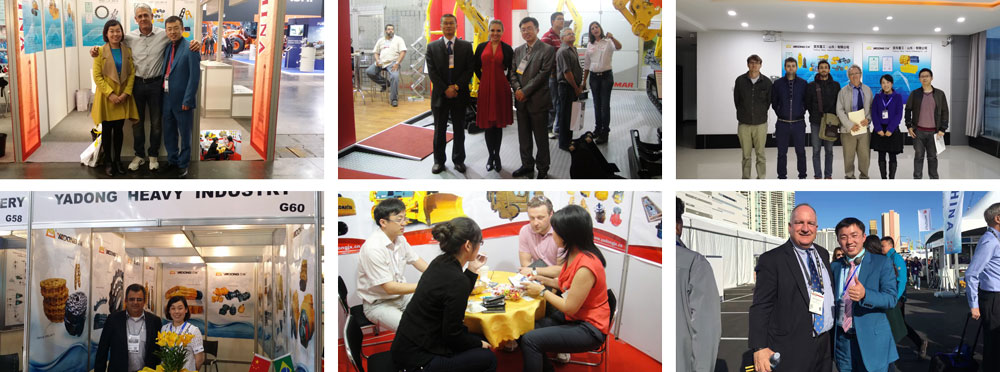
Exhibition cabinets
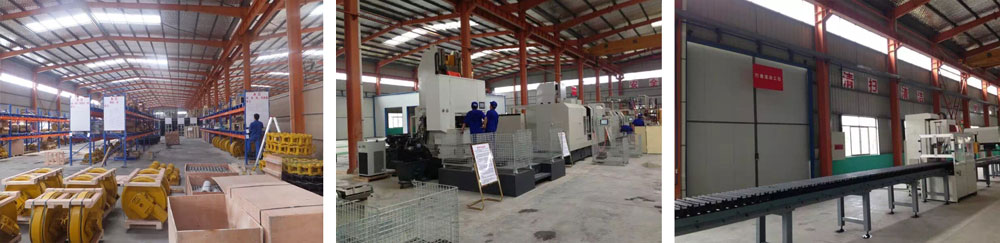
Getting to know the plant
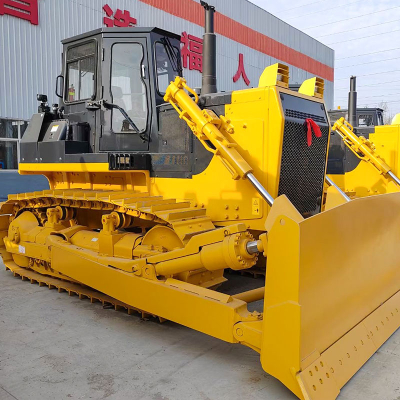
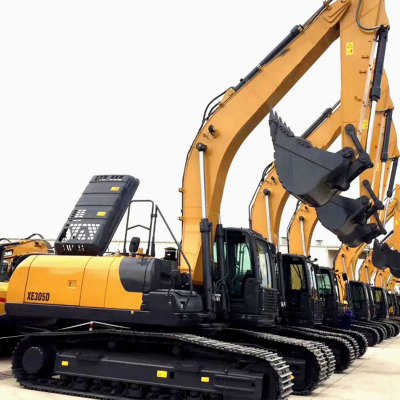
The plant employs a team of highly qualified and experienced engineers who continuously implement technological innovations and improve its products. The company currently holds a number of independent intellectual property rights and patented technologies. Its construction equipment includes a wide range of excavators, loaders, cranes, bulldozers, and other machines. These products are distinguished by their high productivity, reliability, energy efficiency, and environmental friendliness, as well as the ability to adapt to challenging operating conditions in a variety of climates and work environments worldwide.
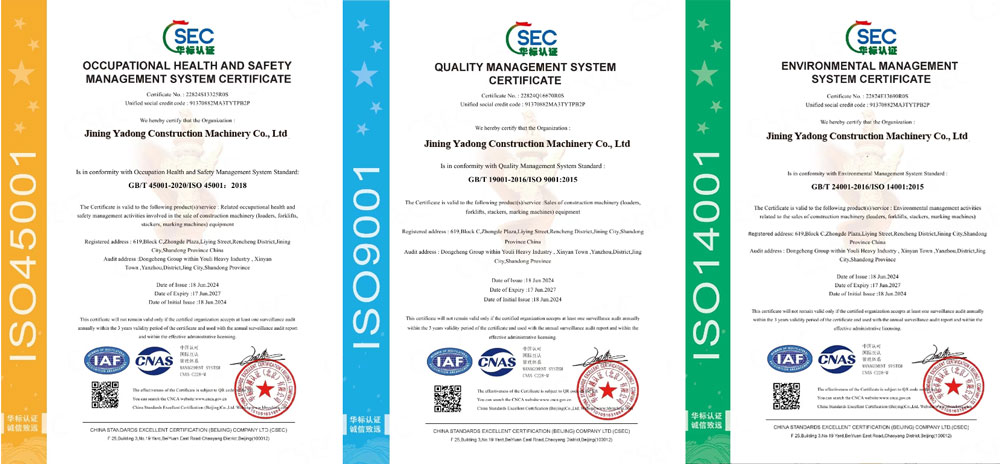
Awards and qualificationsfication
frequently asked questions
1. Which countries do we export to?
Asia: Vietnam, India, Indonesia, Pakistan, Kazakhstan, Uzbekistan, etc.
Europe: Russia, Belarus, Ukraine, Lithuania, Saudi Arabia, etc.
South America: Brazil, Chile, Paraguay, Argentina, etc.
Africa: South Africa, Ethiopia, Libya, etc.
2.What payment terms can we accept?
Usually we can work on T/T, 30% TT before production and 70% TT before shipment
3.What logistics methods can we use for delivery?
1) For most of Europe, South America and Africa etc. countries, we can go by container or Roro via ocean freight.
2) For China's neighboring countries, such as Russia, Vietnam, Kazakhstan, Uzbekistan, etc., we can deliver by road or rail.
3) For light spare parts in urgent requirement, we can ship it by international courier service, such as DHL, TNT, EMS or other air freight.
4. How can you guarantee that you have delivered the goods to customers?
A: We will provide you with full delivery information for you confirmed.
5.What are our advantages compared with other manufacturers/factories?
1) Reliable quality: Carefully select reliable manufacturers to support spare parts such as engines, axles, transmissions, and many parts designed and produced by ourselves, always adopting the best materials.
2) Competitive price: Concentration of mechanized production in large quantities reduces production costs to ensure competitive price.
3) Service Team: Firstly, our sales managers are available 24/7, ready to answer your questions at any time. Secondly, our professional technical support team, with senior technicians, is ready to provide support to users and dealers. Most issues can be resolved within 24 hours.
4) Fast delivery: Generally, we can delivery within 10 working days in factory after receiving the advance payment from customers.
6. How can you provide after-sales service to customers?
A: We will reply you at the first time and help you solve the problems within 24 hours. If we really need your local, we
We will send your professional person to your locality to help you solve the problems without any hesitation, supply you with all-round