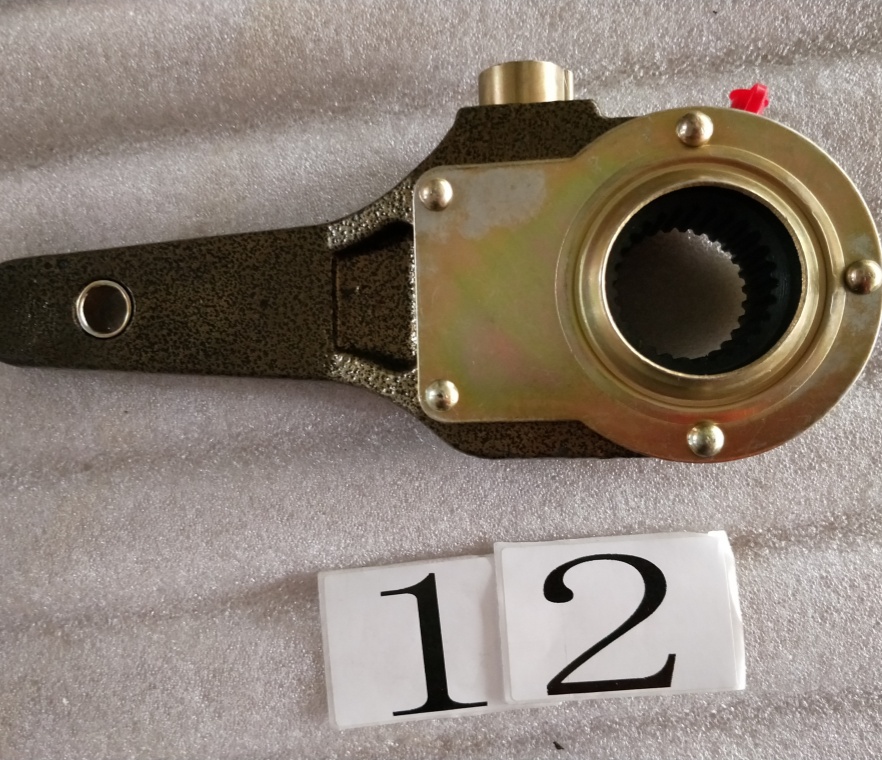
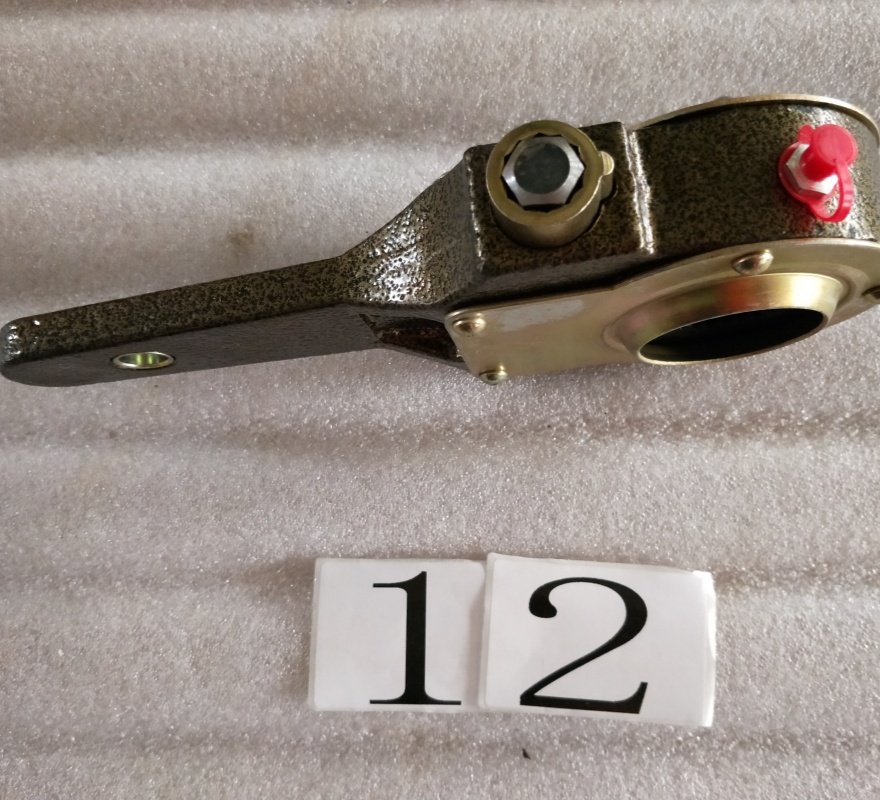
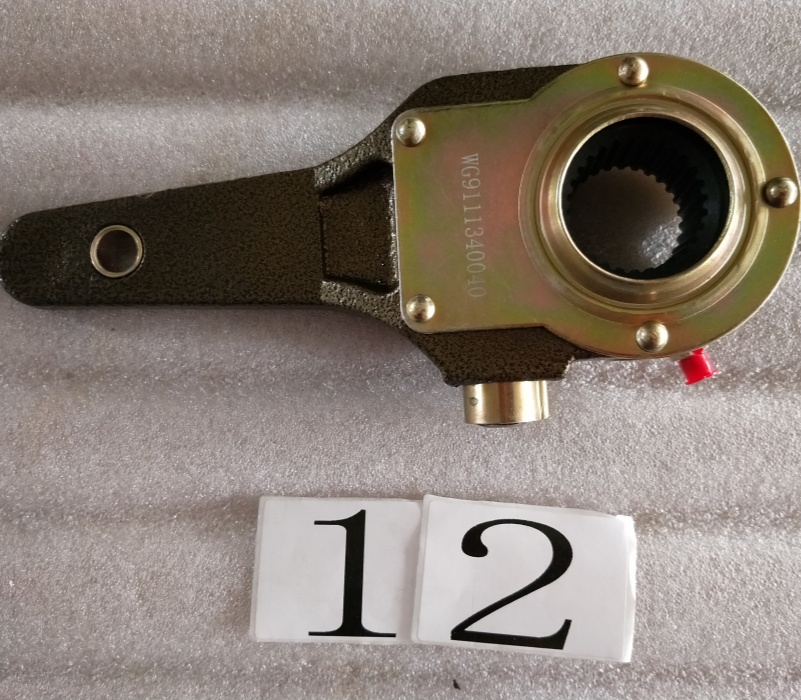
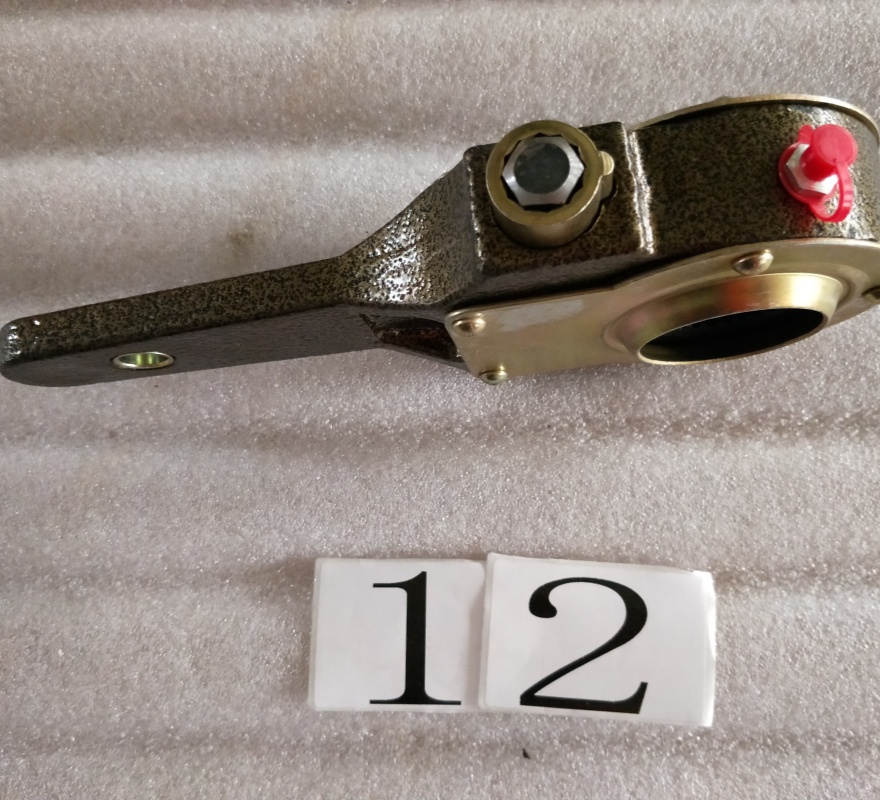
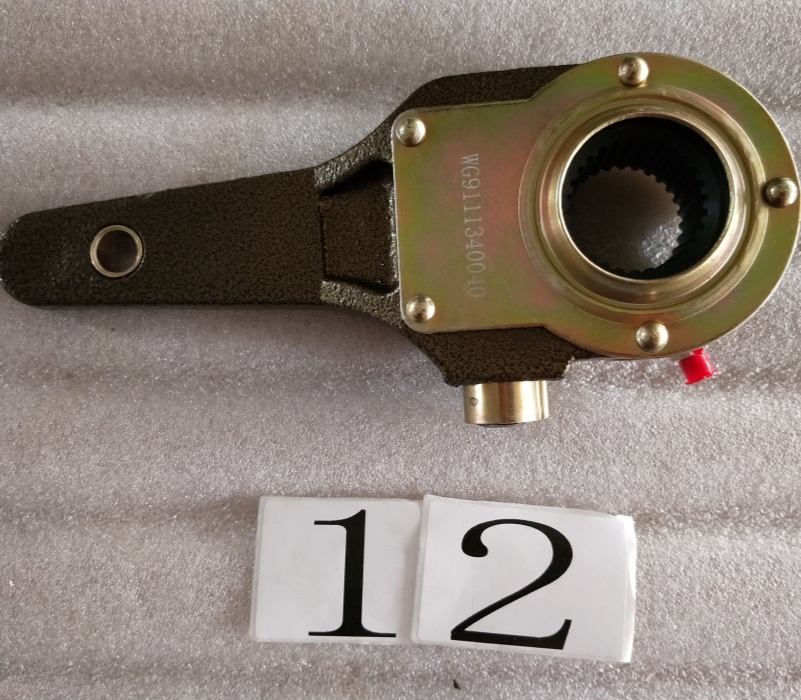
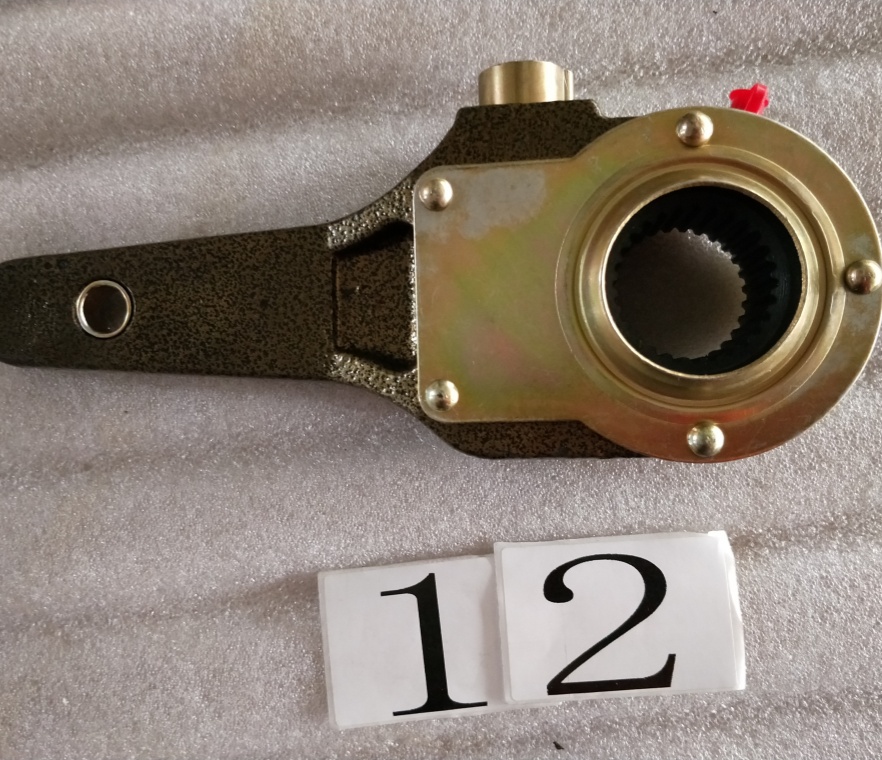
Sinotruk AZ9111340040 Manual Clearance Adjuster Original
1.Adjustment Precision: Provides precise adjustment of brake clearance. Allows operators to accurately set the clearance, ensuring stable and effective braking performance and reducing braking distance.
2. High reliability: Made of durable and wear-resistant material, it can withstand the heavy mechanical loads encountered during braking. This ensures a long service life and reliable operation.
3. Excellent compatibility: Specially designed for SINOTRUK vehicles, it perfectly matches other brake system components. This facilitates installation and replacement, and improves the efficiency of all system components.
Product Introduction
Product details
type
Manual brake adjustment lever: The clearance between the brake shoe and the brake drum or brake disc must be adjusted manually regularly to ensure effective braking. This design is relatively simple and inexpensive, but requires regular maintenance and adjustment.
Automatic brake adjuster: It automatically adjusts the clearance between the brake shoe and the brake drum or brake disc according to brake shoe wear during braking, maintaining a constant clearance and ensuring safe and reliable braking. This frees up labor, reduces the number of repairs, and extends the interval between vehicle maintenance.
Operating principle: An automatic brake adjuster lever typically uses the movement of the air chamber tappet during braking. Through internal gears, racks, worms, worm gears, and other transmission mechanisms, the linear movement of the tappet is converted into rotation of the camshaft, thereby adjusting the clearance between the brake shoes and the brake drum. A manual brake adjuster adjusts the clearance by manually turning an adjusting nut or bolt to change the tappet length or camshaft angle.
Material and Construction: Mainly consists of the housing, transmission mechanism, control lever, locking pin, etc. The housing is typically made of ductile iron or cast steel, which offers high strength and wear resistance. The transmission mechanism's gears, racks, worms, worm wheels, and other components are typically made of high-quality steel and undergo heat treatment and surface treatment to enhance their hardness and wear resistance. Components such as control levers and locking pins are also made of suitable metal materials to ensure they will not deform or become damaged during long-term use.
Installation
Preparation: Make sure all accessories are included, including the brake adjusting lever, lock pin, retaining spring, adjusting shim, roll pin, cotter pin, etc. Prepare the necessary tools such as wrenches, screwdrivers, calipers, torque wrenches, etc. Clean the installation site and remove oil, dust and rust from the surface of the camshaft, bracket, etc.
Installation steps
Installing the self-adjusting lever on the camshaft: First, insert the locking pin into the hole on the side of the camshaft bracket, install the self-adjusting lever on the camshaft, and simultaneously adjust the control lever so that the flat part of the locking pin fits into the hole on the control lever. Use snap rings, adjusting washers, and shims to secure the self-adjusting lever to the camshaft. Select appropriate adjusting washers to ensure the axial clearance of the self-adjusting lever is within 0.5-1.0 mm. Please note that when installing the self-adjusting lever, the direction of the arrow should match the direction in which the air chamber tappet extends, and the handle of the self-adjusting lever should be as far away from the air chamber bracket as possible to avoid interference during subsequent installation of the air chamber.
Secure the locking pin: Use the locking nut to secure the locking pin to the camshaft bracket so that the control arm is installed and tightened securely. The plastic bushing should not fall out, and ensure that the centerline of the control arm does not extend beyond the gap in the cover to prevent interference during braking.
Connect the air chamber: Make sure the air chamber brake is released, and using a wrench, manually turn the hex head of the worm screw clockwise to align the hole in the handle with the hole in the air chamber's U-shaped yoke. Apply grease to the roll pin, connect and secure the holes in the U-shaped yoke and the self-adjusting lever handle with the roll pin, and secure with a cotter pin.
Adjust the clearance: Using an M12 torque wrench (torque wrench torque 12-18Nm), manually adjust the hexagonal head of the worm gear clockwise until the brake lining and the brake drum barely touch each other (clearance is 0), and then turn the hexagonal head of the worm gear in the opposite direction by about 3/4 of a turn (270°). Make sure that the vehicle's brake pressure is within the requirements (≥0.6MPa), and depress the brake pedal to its maximum stroke several times in place until the brake clearance is adjusted to the normal range (0.6-1.1mm).
Common Mistakes
The adjustment lever does not move
Causes: The gears and racks inside the adjusting lever are severely worn, resulting in the impossibility of normal transmission; the motor or solenoid valve is faulty and cannot provide power; the sensor is faulty and cannot accurately determine the gap signal; The control line is open, shorted, or has poor contact, affecting signal transmission and command execution.
Impact: The gap between the brake shoe and brake drum cannot be adjusted automatically. As the brake shoe wears, the gap will gradually increase, resulting in softer brake feel and longer stopping distances.
Imprecise adjustment
Reasons: The accuracy of the sensor decreases, and the measured clearance value becomes inaccurate; problems such as jamming and loosening of the internal transmission mechanism occur, leading to adjustment errors; the adjusting lever is installed incorrectly, such as the axial clearance is too large or too small, which affects the adjustment effect.
Impact: This can cause the clearance between the brake shoe and brake drum to become too large or too small. If the clearance is too large, braking distances will increase; if the clearance is too small, friction will occur between the brake shoe and brake drum, increasing fuel consumption and brake pad wear. It can also cause the brake drum to overheat, affecting braking performance.
Abnormal sound
Causes: Wear and tear on internal components. For example, poor engagement of worn gears and racks will cause friction or impact sounds; insufficient oil or poor lubrication will cause dry friction between components and abnormal noise; loose installation will cause the adjuster lever to collide or rub against other components during operation.
Impact: It produces abnormal noise that affects the driving experience and can also be an early sign of a malfunction. If not addressed promptly, it can lead to more serious problems.
Sinotruk brake adjustment levers are divided into two types: manual and automatic. The adjustment methods are as follows:
Method of adjusting the handbrake lever
Preparation: Park the car on a level, firm surface, apply the handbrake, install anti-skid devices such as triangular wooden blocks, and ensure the car is secure and immobile. Use a jack and a safety stand to elevate the part of the wheel to be adjusted so that the wheel is at a suitable height from the ground for ease of operation. Have the appropriate tools, such as wrenches, screwdrivers, calipers, etc., readily available.
Locate the adjuster lever: it's usually located between the axle and the brake chamber, connecting the brake chamber pushrod to the camshaft. On some models, you may need to remove the wheel or related components to clearly see the adjuster lever.
Releasing the locking device: For an adjusting lever with a locking sleeve design, press the locking sleeve into the housing. If the adjusting lever has a locking nut, loosen it with a wrench to facilitate subsequent adjustment of the worm shaft.
Adjust the brake clearance: Use a wrench or screwdriver to slowly rotate the worm shaft. Generally, turning the worm shaft to the right decreases the clearance between the brake shoe and brake drum, while turning it to the left increases the clearance. When adjusting, rotate the worm shaft while simultaneously measuring the clearance between the brake shoe and brake drum with calipers or other measuring tools until it reaches the specified value, which is typically 0.6–1.1 mm.
Return Lock: After adjusting to the desired position, slowly rotate the worm shaft to ensure the locking sleeve has returned and locked the worm shaft. If the design has a locking nut, tighten the locking nut to prevent the adjustment lever from loosening.
Inspection and check: Lower the vehicle, start the engine, let the air pressure reach the normal operating range, then perform a brake test to check the brake sensitivity, whether the braking distance is normal, and whether the vehicle has any abnormal conditions such as deviations.
Method of adjusting the automatic brake adjuster lever
Daily Inspection: During daily use and vehicle maintenance, the most important thing to check is that the automatic adjustment lever is working properly. Check for damage or deformation of the adjustment lever, a loose connection, whether the air chamber plunger extends and retracts properly, etc.
Functional test: Start the vehicle, bring the air pressure to the normal operating range, brake several times, and check whether the automatic adjustment lever can automatically adjust the brake clearance after braking. You can determine whether the adjustment lever is working properly by observing the change in the air chamber plunger stroke. Under normal conditions, as the brake pads wear, the air chamber plunger stroke will gradually increase, but the automatic adjustment lever will control it within a certain range.
Manual Fine-Tuning (Special Circumstances): If you find that the automatic adjuster's adjustment effect is less than ideal, such as the brake clearance being too large or too small, first check that other brake system components are in good condition, such as the brake pads, brake drums, air chambers, etc. If the problem is determined to be with the automatic adjuster, you can try manual fine-tuning. After stopping the vehicle and taking safety precautions, locate the adjusting screw or adjustment mechanism on the automatic adjuster. Generally, fine-tuning can be accomplished by turning the adjusting screw. However, the fine-tuning amplitude should be small, and a brake test should be performed after each adjustment to observe the adjustment effect until the brake clearance returns to the normal range.
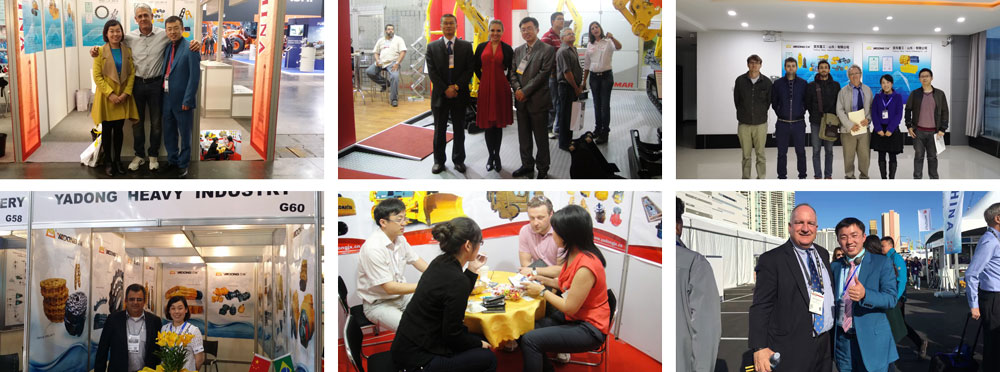
Exhibition cabinets
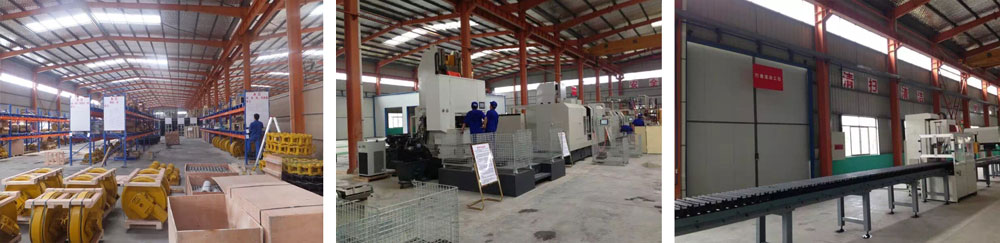
Getting to know the plant
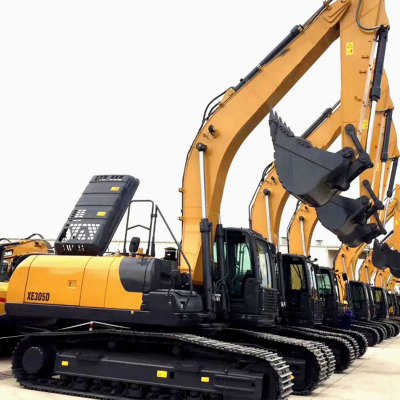
The plant employs a team of highly qualified and experienced engineers who continuously implement technological innovations and improve its products. The company currently holds a number of independent intellectual property rights and patented technologies. Its construction equipment includes a wide range of excavators, loaders, cranes, bulldozers, and other machines. These products are distinguished by their high productivity, reliability, energy efficiency, and environmental friendliness, as well as the ability to adapt to challenging operating conditions in a variety of climates and work environments worldwide.
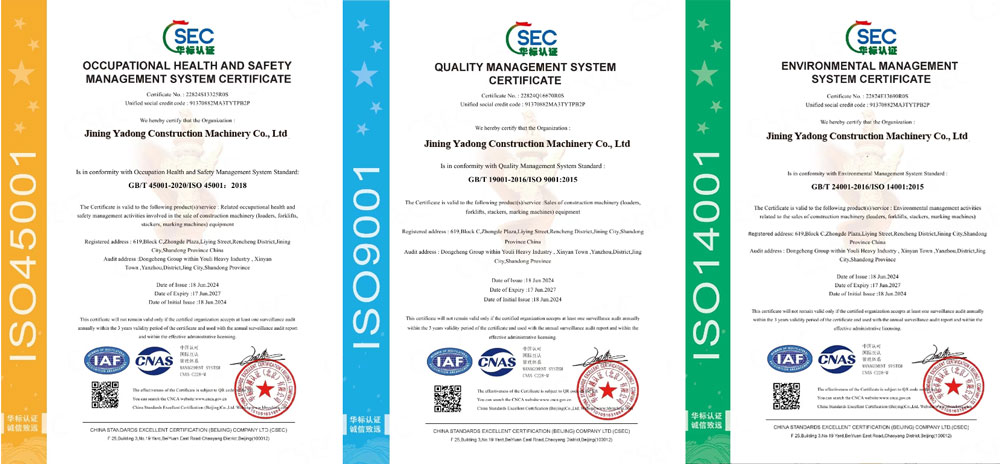
Awards and qualificationsfication
frequently asked questions
1. Which countries do we export to?
Asia: Vietnam, India, Indonesia, Pakistan, Kazakhstan, Uzbekistan, etc.
Europe: Russia, Belarus, Ukraine, Lithuania, Saudi Arabia, etc.
South America: Brazil, Chile, Paraguay, Argentina, etc.
Africa: South Africa, Ethiopia, Libya, etc.
2.What payment terms can we accept?
Usually we can work on T/T, 30% TT before production and 70% TT before shipment
3.What logistics methods can we work for delivery?
1) For most of Europe, South America and Africa etc. countries, we can go by container or Roro via ocean freight.
2) For China's neighboring countries such as Russia, Vietnam, Kazakhstan, Uzbekistan, etc., we can deliver by road or rail.
3) For light spare parts in urgent requirement, we can ship it by international courier service, such as DHL, TNT, EMS or other air freight.
4. How can you guarantee that you have delivered the goods to customers?
A: We will provide you with full delivery information for you confirmed.
5.What are our advantages compared with other manufacturers/factories?
1) Reliable quality: Carefully select reliable manufacturers to support spare parts such as engines, axles, transmissions, and many parts designed and produced by ourselves, always adopting the best materials.
2) Competitive price: Concentration of mechanized production in large quantities reduces production costs to ensure competitive price.
3) Service Team: Firstly, our sales managers are available 24/7, ready to answer your questions at any time. Secondly, our professional technical support team, with senior technicians, is ready to provide support to users and dealers. Most issues can be resolved within 24 hours.
4) Fast delivery: Generally, we can delivery within 10 working days in factory after receiving the advance payment from customers.
6. How can you provide after-sales service to customers?
A: We will reply you at the first time and help you solve the problems within 24 hours. If we really need your local, we
We will send your professional person to your locality to help you solve the problems without any hesitation, supply you with all-round